


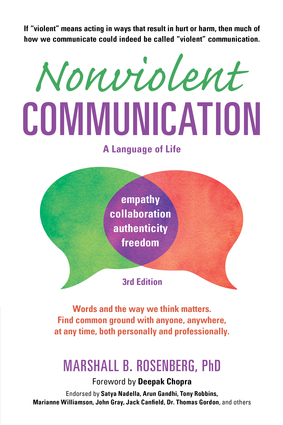

Nonviolent Communication: A Language of Life
Life-Changing Tools for Healthy Relationships
Nonviolent Communication Guides
SELF-HELP
264 Pages, 6 x 9
Formats: Paperback, ebook: PDF, ebook: EPUB, Mobipocket, ebook: EPUB
Paperback, $21.99 (US $21.99) (CA $26.95)
Publication Date: September 2015
ISBN 9781892005281

Overview
8,000,000 COPIES SOLD WORLDWIDE • TRANSLATED INTO MORE THAN 40 LANGUAGES
Most of us were never taught what to say when a conversation gets hard.
A disagreement with your partner that keeps circling back. A tense meeting at work. A teenager who has stopped telling you anything. In moments like these, most of us fall back on the same patterns — defending, blaming, going quiet — and the relationship pays the price.
In this classic guide, Marshall B. Rosenberg, Ph.D., shows there is another way. Nonviolent Communication is a practical approach to effective communication that helps you express yourself honestly, listen with empathy, strengthen your relationships, and approach conflict with understanding.
What is Nonviolent Communication?
Many of our most familiar communication habits — judging, blaming, criticizing, going on the defensive, reacting in anger, deciding who is ""right"" or ""wrong"" — create hurt and distance. Nonviolent Communication offers a different approach, built on awareness, honest expression, empathy, and understanding.
Nonviolent Communication is the integration of four things:
• Consciousness: a set of principles that support living a life of compassion, collaboration, courage, and authenticity
• Language: understanding how words contribute to connection or distance
• Communication: knowing how to ask for what we want, how to practice active listening, how to hear others even in disagreement, and how to move toward solutions that work for all
• Means of influence: sharing "power with others" rather than using "power over others"
Nonviolent Communication serves our desire to do three things:
• Increase our ability to live with choice, meaning, and connection
• Connect empathically with self and others to have more satisfying relationships
• Sharing of resources so everyone is able to benefit
This is a practical framework, not a theory. Rather than handing you scripts, it helps you recognize what is happening beneath the words and respond with greater understanding.
What you will learn:
• How to handle difficult conversations without escalating into argument or shutting down
• Conflict resolution skills you can use at home, at work, and in your community
• How to listen so people feel heard — and how to hear the need behind someone's anger or criticism
• How to say what matters to you clearly and honestly, without blame, judgment, or demand
• How to respond to hostility and defensiveness with empathy, for others and for yourself
• How to build healthier relationships with partners, children, parents, colleagues, and friends
At work as well as at home:
Whether you are leading a team at work or working through a disagreement with a family member, the ability to hear what matters to someone else and say clearly what matters to you changes the conversation. These are professional communication skills as much as personal ones, and they apply across workplace discussions, team relationships, and the conversations most people would rather avoid.
Who this book is for:
This is for you if you want stronger interpersonal skills and healthier relationships. Couples and families working through recurring conflict. Managers, teachers, healthcare workers, mediators, and anyone whose work depends on being understood. Whether you want better communication, stronger relationships, or practical tools for conflict resolution, this book offers a framework you can apply at home, at work, and in everyday life.
Marshall Rosenberg developed the Nonviolent Communication process over four decades of work in more than sixty countries, from schools and prisons to workplaces and regions torn by war. This is the book that started it all, and it remains standard reading for organizations, counselors, and communities around the world.
Nonviolent Communication: A Language of Life offers practical tools for expressing yourself honestly, listening with empathy, and creating greater understanding in the conversations that matter most.